Can You Eat Expired Edibles?
The short answer on eating expired edibles is that they are usually not dangerous, but they do lose potency, flavor, and texture over time. Most of the time, you are not dealing with anything harmful, but you are definitely not getting the experience you were hoping for, and it often ends up feeling like a waste of good product and money.
The real issue behind the shelf life of edibles comes down to food safety, because mold, rancid fats, or bacteria can develop depending on how they were stored. If something smells off, looks weird, or tastes questionable, that is your sign to walk away and not overthink it. Knowing the difference between “expired” and “actually bad” makes all the difference when deciding what is worth keeping.
Why Edibles Don’t Last Forever
There is no way around it, marijuana is expensive whether you grab it from a dispensary or that guy you know. Even when you find a decent deal, edibles add up fast, so letting them go stale or weak just feels like throwing money away. Nobody is trying to waste perfectly good weed because it sat in the back of a drawer too long.
Even people who save money by obtaining a medical card still feel it when stocking up on infused treats. If you are following a solid cannabutter recipe and making your own batches at home, you are putting in time, effort, and product every single time. That is exactly why understanding the shelf life of edibles matters more than most people think.
What “Expiration” Actually Means for Edibles
The phrase shelf-stable edibles sounds reassuring, but it does not mean your stash is going to last forever. It just means the product is less likely to spoil quickly, not that it stays fresh, flavorful, or potent indefinitely. Time is still doing its thing whether you notice it or not.
Most products from a licensed dispensary come with a “best by” date, which is more about peak quality than actual safety. The shelf life of edibles is really a mix of food science and cannabis chemistry, and those two do not always line up perfectly. Something can be safe to eat and still hit way softer than expected.
How Edibles Break Down Over Time
Food Ingredients Go Bad First
The biggest risk tied to what happens if you eat expired cannabutter is that fats start to oxidize and go rancid. That is when things start smelling funky, tasting off, and generally not worth it anymore. It is the same deal as regular butter, just with higher stakes.
Baked goods made from a cannabutter recipe are especially prone to mold and bacteria because they contain moisture and perishable ingredients. Even a fresh batch of the best pot brownies will not hold up very long sitting out on the counter. If you would not eat old regular brownies, you should not take chances with infused ones either.
THC Slowly Turns Into CBN
As edibles age, THC naturally breaks down into Cannabinol (CBN) due to exposure to heat, light, oxygen, and time. Those environmental factors speed up the shelf life of edibles and directly affect how strong they feel. Storage matters more than people think, even if it seems minor.
CBN is known for more mellow, sleepy effects, which is why older edibles can feel like a completely different experience. I have definitely tried eating expired edibles before, and it is usually just weaker and more sedating than expected. If you are expecting the same kick, you are probably going to be disappointed.
Typical Shelf Life of Edibles by Type
Understanding the edibles’ shelf life starts with knowing that not all products age the same way. Ingredients, moisture, and storage conditions all play a role in how long something stays fresh and effective. Some edibles are built to last, while others have a much shorter window.
- Gummies and candies: 6 to 12 months when stored properly
- Chocolates: 6 to 12 months with stable temperature control
- Baked goods: 3 to 7 days at room temperature or up to 1 week refrigerated
- Cannabutter: 2 to 4 weeks refrigerated or up to 6 months frozen
The shelf life of edibles depends heavily on heat, light, oxygen, and moisture exposure. If you control those factors, your products will last much longer than expected. If not, things can go downhill pretty quickly.
Five Ways to Tell If Your Edibles Have Gone Bad
If you are thinking about eating expired edibles, your senses will usually tell you what you need to know. Most spoiled products give off clear warning signs before they become a problem. You just have to pay attention and not ignore them.
- Visible mold or strange discoloration
- Sour or rancid smell
- Slimy or overly dry texture
- Separation in butter or oils
- Weird or bitter taste
These signs mean the product has actually gone bad, not just lost potency. If you notice any of these, it is better to toss them and move on. No edible is worth risking food poisoning.
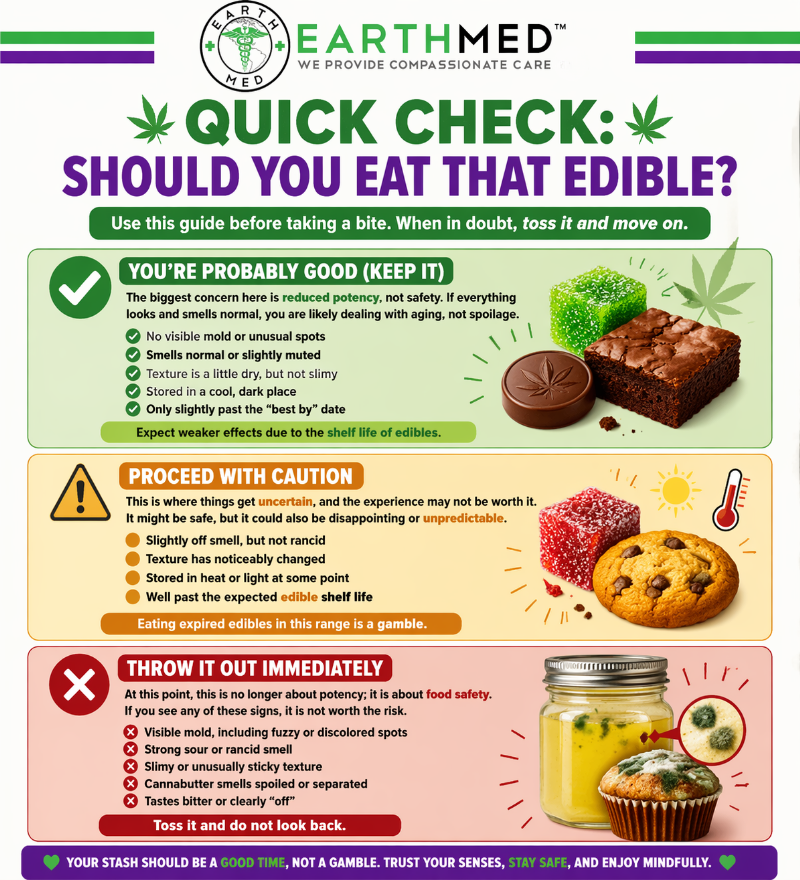
Quick Check: Should You Eat That Edible?
Use this guide before taking a bite. When in doubt, toss it and move on.
You’re Probably Good (Keep It)
The biggest concern here is reduced potency, not safety. If everything looks and smells normal, you are likely dealing with aging, not spoilage.
- No visible mold or unusual spots
- Smells normal or slightly muted
- Texture is a little dry, but not slimy
- Stored in a cool, dark place
- Only slightly past the “best by” date
Expect weaker effects due to the shelf life of edibles.
Proceed with Caution
This is where things get uncertain, and the experience may not be worth it. It might be safe, but it could also be disappointing or unpredictable.
- Slightly off smell, but not rancid
- Texture has noticeably changed
- Stored in heat or light at some point
- Well past the expected edible shelf life
Eating expired edibles in this range is a gamble.
Throw It Out Immediately
At this point, this is no longer about potency; it is about food safety. If you see any of these signs, it is not worth the risk.
- Visible mold, including fuzzy or discolored spots
- Strong sour or rancid smell
- Slimy or unusually sticky texture
- Cannabutter smells spoiled or separated
- Tastes bitter or clearly off
Toss it and do not look back.
How to Store Edibles Like a Pro
If you want to extend the shelf life of edibles, storage is where you make the biggest difference. A few simple habits can keep your stash fresh way longer than you would expect. It is one of the easiest ways to protect what you paid for.
- Keep edibles in airtight containers to limit oxygen exposure
- Store them in a cool, dark place away from sunlight
- Refrigerate baked goods and butter-based products
- Use freezing pot brownies as a long-term storage move
- Avoid thawing and refreezing multiple times
Freezing pot brownies is one of the easiest ways to keep them fresh without sacrificing too much quality. When stored properly, both flavor and potency last longer. That means your edibles actually hit the way they are supposed to.
What Happens If You Eat Expired Edibles?
The reality of eating expired edibles is that it is usually more disappointing than dangerous. Most people notice weaker effects and stale flavor before anything else. It is more of a letdown than a serious issue in most cases.
When it comes to what happens if you eat expired cannabutter, spoiled fats are where problems can show up. That can lead to nausea or stomach discomfort if the product has truly gone bad. If something feels off after eating it, it is best to stop and give your body time to settle.
A Quick Reality Check on Convenience
Most people are not letting their stash sit long enough to really test the limits of edibles’ shelf life. Between personal use and sharing, those treats usually disappear pretty quickly. Expiration is not always the biggest issue in real life.
Whether you grab something from EarthMed or bake your own batch of the best pot brownies, they rarely stick around long. If you are planning ahead or traveling, it is worth knowing that bringing edibles on a plane is still federally illegal. Keeping things local usually saves you a headache.
Frequently Asked Questions About the Shelf Life of Edibles
Can you eat expired edibles safely?
Eating expired edibles is generally safe if there are no signs of spoilage. The biggest difference is reduced potency and changes in taste or texture. Always check before diving in.
How long does cannabutter last in the fridge?
The answer to what happens if you eat expired cannabutter depends on how it was stored. Most cannabutter lasts about 2 to 4 weeks in the fridge. Freezing can extend that timeline quite a bit.
Do edibles get stronger as they age?
The shelf life of edibles includes a gradual drop in THC over time. THC converts into CBN, which creates more relaxing effects. Older edibles usually feel weaker, not stronger.
What are the safest edibles for long storage?
Shelf-stable edibles like gummies and hard candies last longer because they have less moisture. They are less likely to grow mold compared to baked goods. Storage still plays a big role in how long they last.
Don’t Let Good Edibles Go to Waste
Understanding the shelf life of edibles helps you get the most out of what you buy or make. A little awareness goes a long way when it comes to keeping your stash fresh and effective. Nobody wants to waste good weed on something that could have been avoided.
If you are spending money on infused treats, you might as well enjoy them at their best instead of rolling the dice on eating expired edibles. Do you actually keep edibles around long enough to expire, or are they gone the second you open the package? Hit me up on social media, and let’s spark up a conversation about it!
