
Are you at least 21 years of age or hold a valid medical marijuana card?
Daily Specials
{{ special.title }}
{{ special.description }}
*{{ note }}

852 S Westgate Ave,
Addison, IL 60101

10441 E Touhy Ave
Rosemont, IL 60018
EARTHMED BLOG

Weed and Dreaming: Why Cannabis Mutes Your REM, Then Blasts It Back
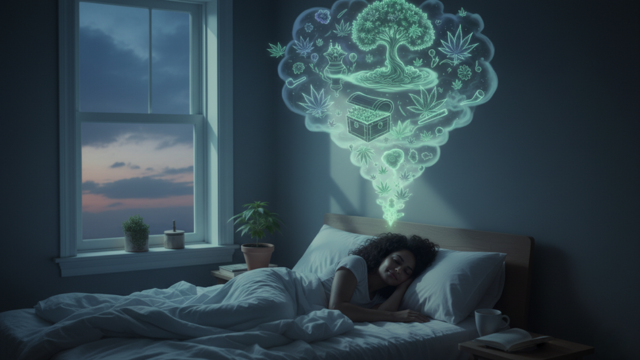
TL;DR: The Trippy Truth About Why Weed Makes Your Dreams Disappear and Come Back Loud
Think your dream life vanished after that bedtime blunt? You're not wrong. Cannabis, especially THC-heavy strains, can press pause on REM sleep, which is where all the wild dreams go down. But once you take a break, your brain makes up for lost time with vivid, sometimes chaotic dreams. That’s called REM rebound. Whether you're chasing lucid dreams or trying to dodge the nightmares, what you smoke and when you smoke it can totally shift your dreamscape.
How Sleep and Dreaming Actually Work
Your sleep is made up of cycles, and only one of those stages is the VIP lounge for your subconscious. REM sleep, short for Rapid Eye Movement, is when your brain gets busy processing emotions, sorting memories, and tossing you into vivid dreamland.
Dream recall is highest when you wake up during REM. If that stage is interrupted or shortened, your chances of remembering your dreams drop fast. That’s where cannabis comes in.
How Cannabis Impacts Your Dreaming Brain
Cannabis interacts with the endocannabinoid system, which helps regulate sleep, mood, memory, and more. THC, the main psychoactive compound in weed, binds to receptors in your brain and influences how your sleep cycles play out.
Here’s what usually happens with regular THC use:
- REM sleep is reduced or skipped entirely
- Falling asleep gets easier, but dreams may become scarce
- Non-REM sleep becomes more dominant
The result? Less dream recall and a sleep cycle that’s a little deeper but a little less trippy.
The Science on THC Sleep Effects
Research has shown that THC can reduce the time your brain spends in REM sleep. It may also increase slow-wave sleep, the kind that knocks you out cold. That sounds great if you're just trying to catch some zzz's, but it comes with a trade-off.
Long-term cannabis use can change your sleep architecture. While you may sleep more soundly, you're likely missing out on the emotional and cognitive benefits of REM. And when you stop using cannabis, things shift in a big way.
What Happens When You Quit Weed and Start Dreaming Like Crazy
Enter the REM rebound. When you stop using cannabis after consistent use, your brain tries to make up for all that skipped REM. The result? Your dreams come back fast, vivid, and sometimes completely bonkers.
This period can include:
- Intense emotional dreams
- Nightmares or strange themes
- Lucid dreams that feel hyper-real
For many people, this rebound kicks in within the first few days after quitting and can last anywhere from a week to a few months, depending on how long and how often you used cannabis.
Lucid Dreams and Cannabis: What’s the Connection?
Lucid dreaming is when you become aware you’re dreaming while it’s happening. Some people can even control what happens next. It’s dreamer-level pro mode.
Cannabis, particularly high-THC strains, is not a reliable shortcut to lucid dreaming. Since THC shifts your sleep patterns away from dream-heavy stages, lucid dreams may be harder to access during regular use. However, during REM rebound, when the brain is making up for lost dream time, lucidity may become more likely for some folks.
How to Sleep Well and Still Remember Your Dreams: A 7-Step Dream-Boosting Routine
1. Taper your THC use gradually
Cutting back slowly can reduce withdrawal symptoms and help you avoid a jarring REM rebound that disrupts your sleep.
2. Dose earlier in the evening
Taking THC a few hours before bed gives your body time to metabolize it, which may allow REM sleep to return later in the night.
3. Choose strains with more CBD
Strains higher in CBD and lower in THC are less likely to suppress REM sleep and may support better overall sleep quality.
4. Keep a dream journal by your bed
Writing down anything you remember as soon as you wake up trains your brain to retain dreams and improves recall over time.
5. Use lucid dreaming techniques
Try reality checks, the MILD method (Mnemonic Induction of Lucid Dreams), or wake-back-to-bed strategies to increase your chances of lucidity.
6. Practice consistent sleep hygiene
Go to bed and wake up at the same time every day, avoid screens before bed, and create a calming pre-sleep routine.
7. Be patient and give it time
Vivid dreams may return in the first week after quitting cannabis, but for some people, the rebound peaks around week two or three.
Frequently Asked Questions About Weed and Dreaming
Can weed block dreams?
Yes. THC reduces the time your brain spends in REM sleep, which is where dreams typically occur.
Does cannabis help you sleep better?
THC can help with falling asleep faster, but long-term use may reduce sleep quality and REM activity.
Why are dreams more vivid after quitting weed?
This is due to REM rebound. Your brain is making up for lost REM time, which results in stronger, more memorable dreams.
From Foggy Nights to Wild Dream Rides
Cannabis and dreaming are like frenemies. When you’re using THC regularly, your dream world might go quiet. But take a break, and the lights come back on fast and bright. Whether you're into lucid dreaming, need sleep support, or just want to understand your night life better, cannabis can have a serious effect on how you dream.
Ever had a bizarre dream after quitting weed? Hit me up on social media, and let’s spark up a conversation about it.
Recent Posts





Hours
Sun: {{ locations[0].hours_recreational.Sunday }}Mon: {{ locations[0].hours_recreational.Monday }}
Tue: {{ locations[0].hours_recreational.Tuesday }}
Wed: {{ locations[0].hours_recreational.Wednesday }}
Thu: {{ locations[0].hours_recreational.Thursday }}
Fri: {{ locations[0].hours_recreational.Friday }}
Sat: {{ locations[0].hours_recreational.Saturday }}