
Are you at least 21 years of age or hold a valid medical marijuana card?
Daily Specials
{{ special.title }}
{{ special.description }}
*{{ note }}
852 S Westgate Ave,
Addison, IL 60101
10441 E Touhy Ave
Rosemont, IL 60018
EARTHMED BLOG

Let's Talk Terpenes: Myrcene
If you've spent any time reading the terpene information on Illinois cannabis labels, you've probably seen myrcene. A lot. I swear, sometimes it feels like everything I pick up has myrcene in it.
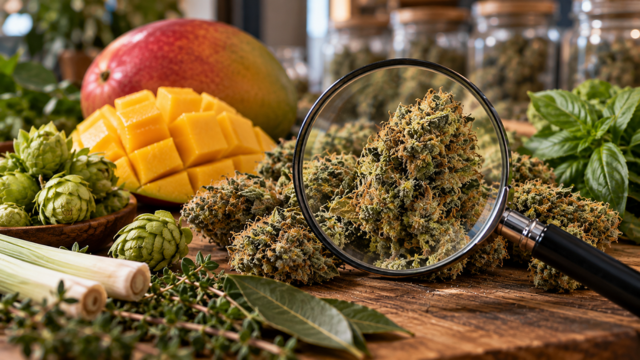
There's a reason this terp keeps showing up. Myrcene, also called beta-myrcene or β-myrcene, is one of the prominent terpenes found in cannabis. It's also responsible for some of those earthy, herbal smells you probably already associate with weed.
So, since myrcene and I keep running into each other at the dispensary, I figured it was time to give this terp its own Terpene Talk.
What is Myrcene?
Myrcene, pronounced as “MER-seen”, is a monoterpene found in cannabis and quite a few other plants. Hops are a big one, which may explain why opening a particularly dank IPA can occasionally make your nose think somebody cracked open a jar of weed nearby.
You'll also find myrcene in lemongrass, thyme, basil, bay leaves, and mangoes. We'll come back to that last one because mangoes and marijuana have developed quite the reputation together.
In cannabis, myrcene contributes to the plant's aroma and flavor. β-myrcene in weed is simply another way you may see beta-myrcene described in research or terpene information.
What Does Myrcene Smell and Taste Like?
Myrcene usually gets described as earthy, musky, herbal, and a little spicy. Depending on the rest of the terpene profile, you might pick up some sweetness too.
To my nose, myrcene lives on the danker side of the terpene family. Limonene can remind you of citrus peels, and pinene practically introduces itself, but myrcene can be harder to pick out until you start paying attention.
That's part of the fun of learning about tasty terpenes and how they impact your high. Once you start smelling your flower and then checking the label, you begin connecting those aromas with the names you've been seeing forever.
What Does Myrcene Do?
This is where we need to separate what people associate with myrcene from what science has actually established.
Myrcene is probably best known in cannabis circles for relaxation. You'll see it associated with sedation, sleep, muscle relaxation, and the legendary "couch-lock" experience where getting up suddenly feels like a project for tomorrow.
There is research behind some of those ideas, but much of it comes from animal and laboratory studies rather than good human trials of myrcene itself. Researchers have investigated potential analgesic, anti-inflammatory, sedative, antioxidant, and other biological effects. That's interesting stuff, but we're not at the point where I would tell you that choosing myrcene weed will reliably make you sleepy or treat pain.
Your cannabis experience comes from more than one terpene anyway. THC percentage, the presence of rare cannabinoids, the rest of the terpene profile, dose, and your own body all get a vote.
Does Myrcene Cause Couch-Lock?
Maybe you've heard the old rule that cannabis above 0.5% myrcene becomes sedating or that myrcene is what separates an "indica" experience from a "sativa" one. I wouldn't shop by that rule alone.
Myrcene appears in research on sedative effects, particularly in animal studies. You may also have heard the rule that flower with more than 0.5% myrcene becomes sedating or causes couch-lock. That number gets repeated a lot in cannabis circles, but research hasn't established 0.5% as a magic cutoff where the effects suddenly change.
This is one reason I've become much more interested in the terpenes actually listed on a cannabis label than whether somebody called the strain indica, sativa, or hybrid. Those categories can still be useful shorthand, but the terpene profile gives you more accurate information about what's actually in the flower you're toking.
Myrcene and the Entourage Effect
Myrcene also comes up a lot when people talk about the entourage effect, the idea that cannabinoids and other cannabis compounds may influence the overall experience together.
You may have read that myrcene can help THC cross the blood-brain barrier and make cannabis hit harder. That theory gets repeated all over cannabis websites, but there isn't strong evidence showing that myrcene actually increases THC transport into the human brain. For now, I’d treat this one as an interesting theory rather than settled science.
I think the more useful takeaway is simpler: pay attention to the whole terpene profile. If you consistently enjoy flower where myrcene ranks near the top of the terpene list, that's worth remembering. Using our Toke Tracker or keeping your own notes can be pretty useful the next time you're staring at a dispensary menu wondering what to buy.
Which Cannabis Strains Are High in Myrcene?
If you're searching for the highest myrcene strains, you'll see familiar names like Blue Dream, Granddaddy Purple, OG Kush, Northern Lights, and other classics show up on plenty of lists.
Here's the catch: a strain name doesn't guarantee a specific myrcene level.
Terpene content can vary with genetics, cultivation, harvest, storage, and the specific batch tested. That's especially worth knowing here in Illinois, where you may find terpene information right on the product label.
So, rather than buying Blue Dream because the internet says it's high in myrcene, check the flower that's actually in front of you. If you're at EarthMed, you can also ask one of our patient care specialists to help you find products with the terpene profile you're interested in.
Does Eating Mango Make Your Weed High Stronger?
Ah, yes. The mango trick.
The theory goes something like this: mangoes contain myrcene, cannabis contains myrcene, so eating a mango before smoking weed will somehow make you higher.
I love mangoes. I love weed. I just wouldn't make plans around this particular equation.
Mangoes really can contain myrcene, but we don't have solid human evidence showing that eating one before using cannabis reliably intensifies or extends your high. There are too many unanswered questions about the amount of myrcene involved, absorption, timing, and whether dietary myrcene would meaningfully change your cannabis experience.
By all means, eat the mango. It's delicious, nutritious, and helps with cottonmouth. Just don't blame me when you aren't orbiting Saturn 45 minutes later.
Is Myrcene Safe?
You may come across another eyebrow-raising fact while researching myrcene: California lists β-myrcene under Proposition 65 as a chemical known to the State of California to cause cancer.
That sounds scary without context. The warning traces back to long-term animal studies where rats and mice were given controlled doses of β-myrcene based on their body weight. Those studies found increased tumors in some groups, but they don’t tell us that the amount of naturally occurring myrcene in cannabis causes cancer in people. Research on myrcene’s safety in humans is still limited.
It's another good reminder that dose and route of exposure matter when we're talking about plant compounds. "Natural" doesn't automatically tell you whether something is safe, and a hazard finding doesn't automatically tell you the risk from the amount you're exposed to in a cannabis product.
Myrcene Is Worth Watching on Your Weed Labels
Of all the terpenes I've covered in Terpene Talk, myrcene may be one of the easiest to start watching simply because I see it so often on Illinois cannabis labels.
Next time you're buying flower, take a second to look past the THC percentage. See where myrcene lands in the terpene profile, notice what else is there with it, and then pay attention to the aroma, flavor, and experience after you smoke. Do that often enough, and those tiny terpene names on the label start to become genuinely useful.
Have you noticed myrcene all over your Illinois weed labels too? Do you have a favorite strain where myrcene takes the lead? Hit me up on social media, and let’s spark up a conversation!
Recent Posts



Hours
Sun: {{ locations[0].hours_recreational.Sunday }}Mon: {{ locations[0].hours_recreational.Monday }}
Tue: {{ locations[0].hours_recreational.Tuesday }}
Wed: {{ locations[0].hours_recreational.Wednesday }}
Thu: {{ locations[0].hours_recreational.Thursday }}
Fri: {{ locations[0].hours_recreational.Friday }}
Sat: {{ locations[0].hours_recreational.Saturday }}